Choose a goal with a visible endpoint
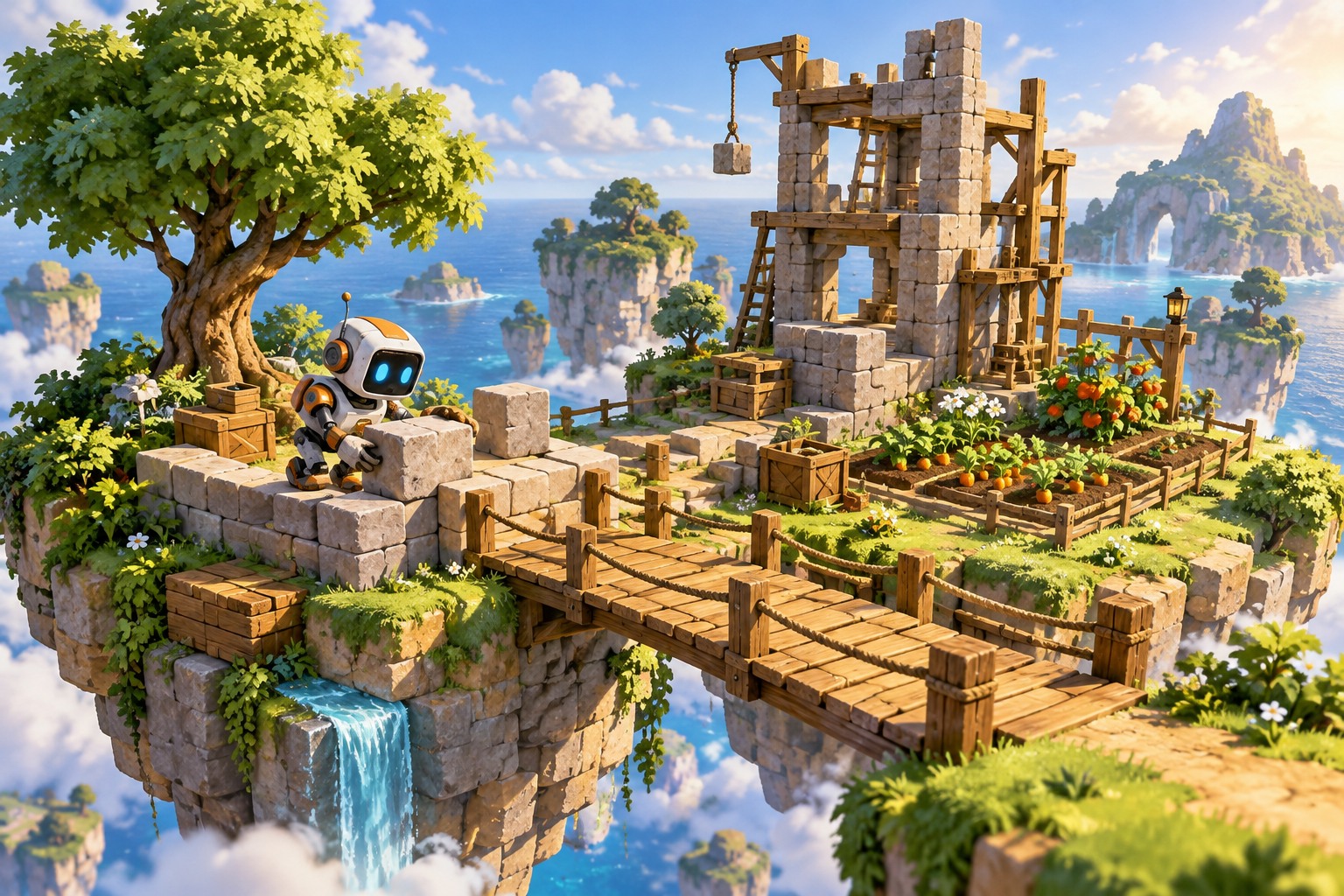
Start with something you can recognize as complete: a small building, a route between two places, a working machine or a collection of a few items. A goal such as build the perfect world can be inspiring but difficult to begin. A bounded first project helps you learn the tools and decide which activities you enjoy.
Check which mode supports that goal. Creative, survival and challenge modes can offer different resources and restrictions, even within the same game. Use the official mode descriptions and do not assume that a project built in one mode can be transferred unchanged to another. Save and export behavior should be verified before investing heavily in a world.
Learn a few relevant tools rather than every possible system. If the goal is a small structure, focus on placement, movement and basic materials. If the goal is a mechanism, begin with a simple working example. The game becomes easier to explore when each new feature answers a question raised by the project.
Leave room to change direction
A self-directed goal should guide play rather than make it feel like unfinished homework. If another activity becomes more interesting, keep a note of the original project and switch deliberately. Separate experiments from a valued creation where the game supports duplicate worlds or save copies. Do not assume an undo command can recover every large change.
In a shared sandbox, agree on building areas and how changes affect other players' work. A collaborative project benefits from a clear scope and a shared understanding of who maintains the world. Check whether progress depends on one host being present and how supported backups are handled. Those practical details can matter more than the size of the project.
At the end of a session, record the next small step or take a screenshot of the current state. Returning is easier when you know what you intended to do. Choose a sandbox because you enjoy its tools and possibilities, while giving yourself enough structure to start. Open-ended play does not require an endless goal; it can be a sequence of small projects that you choose freely.