Choose the kind of thinking you want
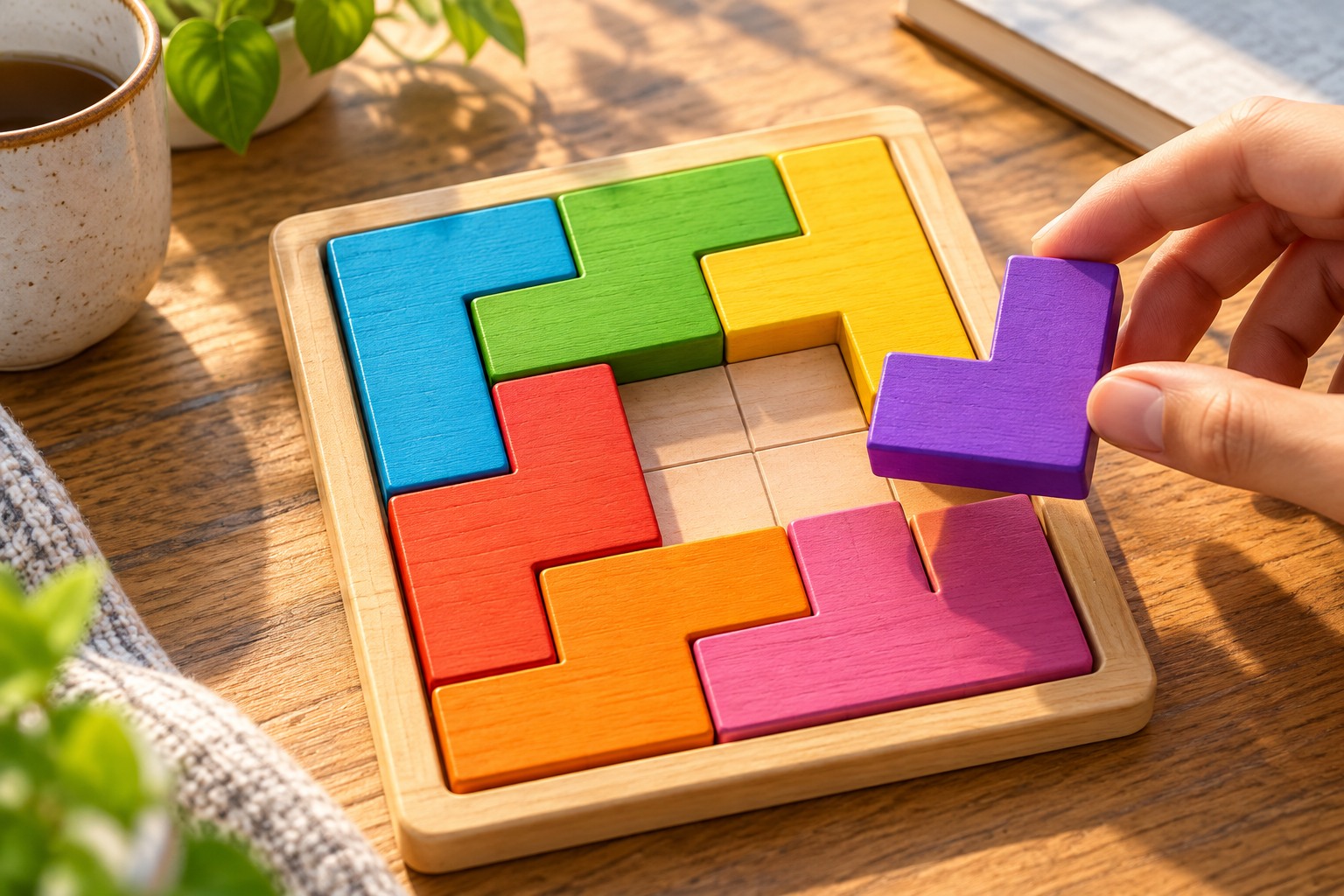
Logic grids, spatial puzzles, word games and physics problems ask for different kinds of attention. Some are comfortable while you chat; others need a quiet uninterrupted stretch. Think about the break you actually have rather than choosing only from a label such as relaxing. A puzzle can be visually gentle and still require sustained concentration.
Look at whether the game presents independent levels or a connected sequence with remembered rules and clues. Independent puzzles can provide a clear endpoint, while a larger puzzle world may be satisfying over many sessions. Neither structure guarantees a short play period. The useful question is whether you can stop while preserving the state and your understanding of it.
Check the save and resume behavior. Does the game retain an unfinished puzzle, reset it on exit or save only completed levels? Test a low-stakes puzzle before relying on it during a commute or brief evening window. Offline support also matters if the intended break happens without a reliable connection.
Inspect hints and readability
A hint system can help when a short session would otherwise end in frustration, but its style matters. Some hints reveal a small next step; others show the solution. Read the description or try it on an early puzzle so you know what to expect. Use the level of help that preserves the part of the challenge you enjoy.
Check symbols, text size and contrast on the device you plan to use. A detailed board that is readable on a desktop may become cramped on a phone or handheld. Input precision matters too: dragging a small piece and selecting a large tile create different demands. Look for supported zoom, interface or control options rather than assuming the puzzle rules are the only accessibility consideration.
End a session at a recognizable point and leave a brief note if the game does not preserve your reasoning. After trying several puzzles, notice whether the format fits the available time or consistently pulls you into a much longer commitment. A suitable short-session game offers a satisfying unit of thought without making every interruption feel like lost work.