Read what the setting actually changes
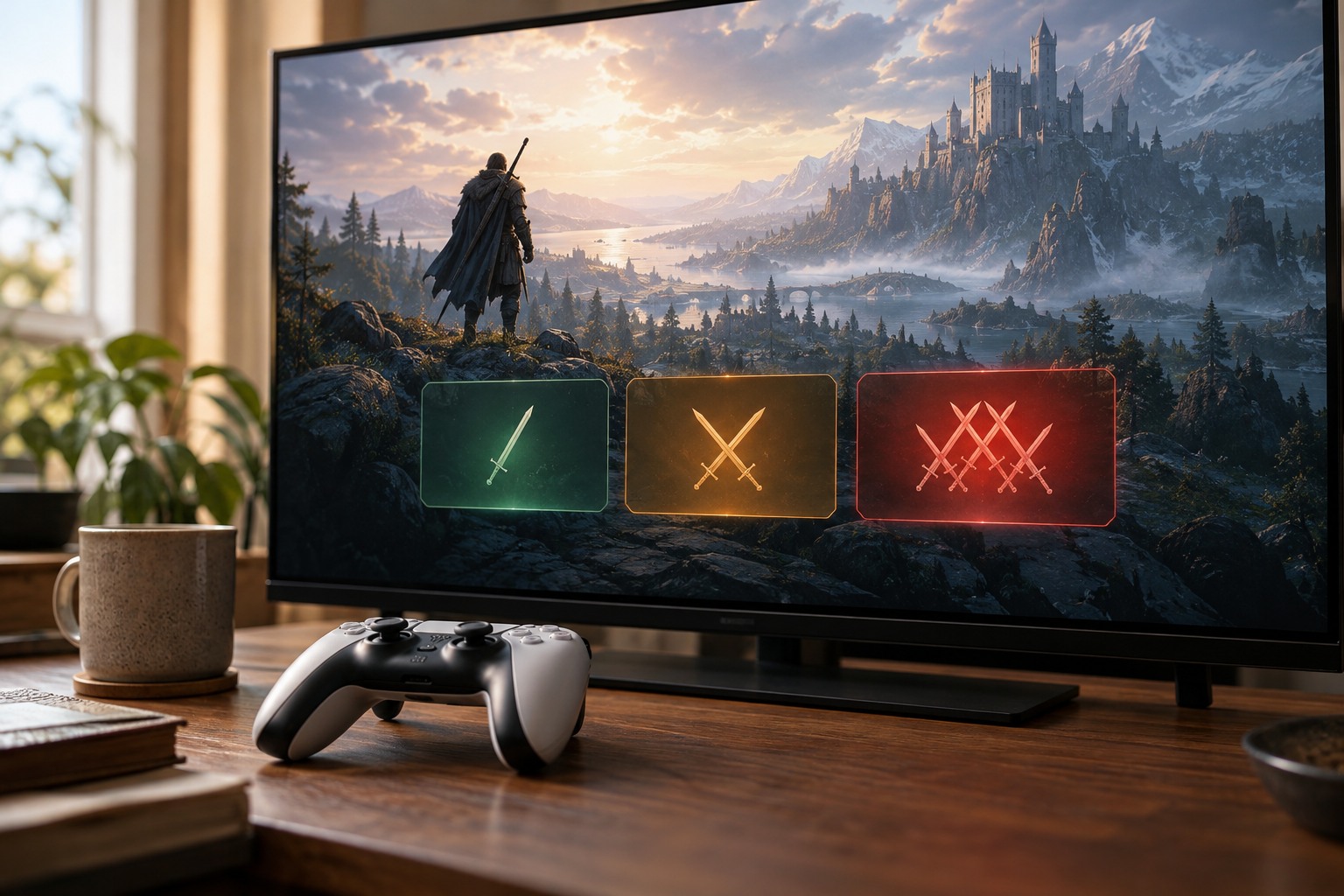
A difficulty option may alter damage, enemy behavior, resource availability, timing windows or several of these at once. Names such as normal and hard are not standardized between games. Read the description and check whether the level can be changed later. Some games attach restrictions or separate achievements to a mode, so understand those conditions before committing to a long save.
Think about what you enjoy practicing. You may want demanding puzzles but forgiving combat, or tense resource management without strict timing. If the game offers separate assists or custom difficulty controls, use them to shape those parts independently. Lowering the overall difficulty is not the only possible response to a single frustrating mechanic.
Avoid choosing a setting solely because it is described as the intended experience. That phrase does not tell you how it fits your available time, familiarity or preferred pace. A game played for its story can use a different setting from one you want to master through repeated attempts. Neither choice needs to become a judgment about the player.
Evaluate a representative section
Give the controls and tutorial enough attention to understand the basic systems, then assess a section that resembles normal play. An opening encounter may be unusually easy or deliberately difficult. Notice whether failure teaches you something you want to try, or simply repeats a task you do not enjoy. That distinction is more useful than counting how many attempts a stranger needed.
If you change the difficulty, note what prompted the change and test the same kind of task again. An assist for navigation will not necessarily affect combat, and a damage adjustment may not help with a timed input. Keep useful accessibility settings enabled independently of challenge level. Readable information and comfortable controls are not rewards to withhold until a harder mode is completed.
Check the save implications before switching modes or starting over. If a separate save is required, preserve the existing one where supported. Keep the setting that makes the time you spend worthwhile, and revisit it when your goals change. A first playthrough and a later challenge run can legitimately use different rules.