Start with the exact platform variant
Write down the console generation or computer operating system you will use. Wheel families can contain separate console variants with similar names and appearances. Logitech's G923 listings, for example, distinguish platform versions. A broad family heading is not enough; confirm the exact product number and platform label on the item being sold.
Used listings deserve the same check. Ask for a clear model-label photograph if the description is vague. Do not infer console support from the button symbols alone, and do not assume an adapter will add support unless the relevant manufacturers explicitly document that arrangement.
Check the games you actually intend to play
Look for the wheel maker's compatibility list and the game's own supported-device guidance. Basic steering input, force feedback and additional effects can have different support. A wheel recognized by the operating system may still require a profile or may lack particular effects in a specific game.
Make a small table for your main titles with the platform and required features. This is more useful than a long list of games you might someday buy. If a favorite title is absent from the supported list, ask the manufacturer or publisher rather than treating a forum report from an older version as a guarantee.
Treat pedals and shifters as part of the system
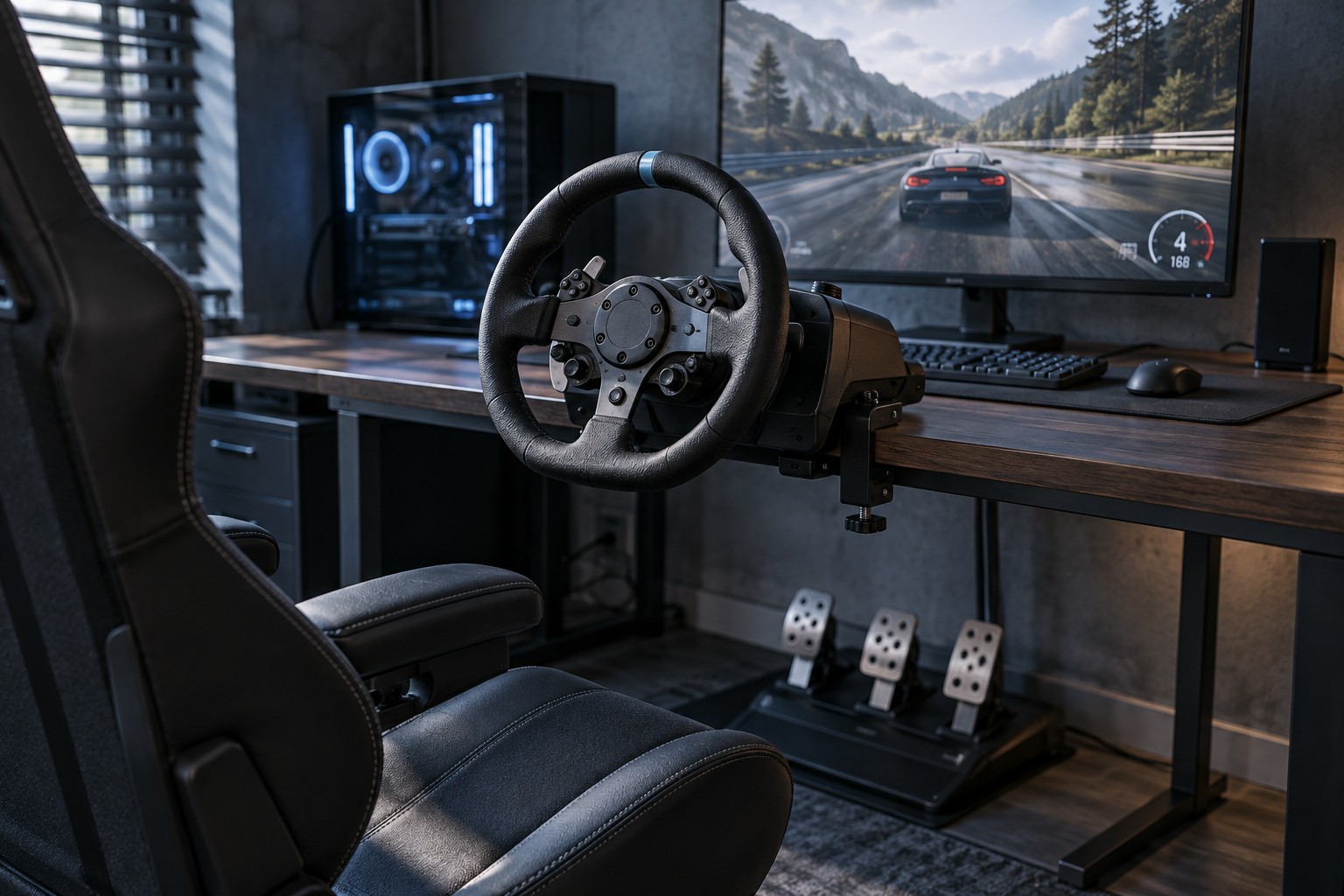
Check how pedals connect: through the wheel base, directly to the computer or through a specific adapter. Mixing components can work in some computer games but may not be supported on a console. Connector shape alone does not establish compatibility between a pedal set and a wheel base.
Include the power supply, desk clamp and any required cables in the purchase calculation. A used wheel missing a proprietary power adapter can be difficult to complete safely. Obtain the correct specified replacement instead of choosing a generic supply solely by plug shape.
Plan a return-period test
Install the manufacturer's supported software or firmware procedure, then test steering, pedals, buttons and force feedback in a familiar practice session. Check calibration with the wheel securely mounted and keep hands clear during any automatic movement described in the instructions. Record the working profile before making detailed adjustments.
A successful purchase is a complete supported arrangement, including the mounting surface and floor space for pedals. Do not spend the whole budget on the wheel while leaving those parts unresolved. Clear compatibility and a stable setup make the equipment usable; a higher torque or feature figure does not settle those requirements.