Observe what moves
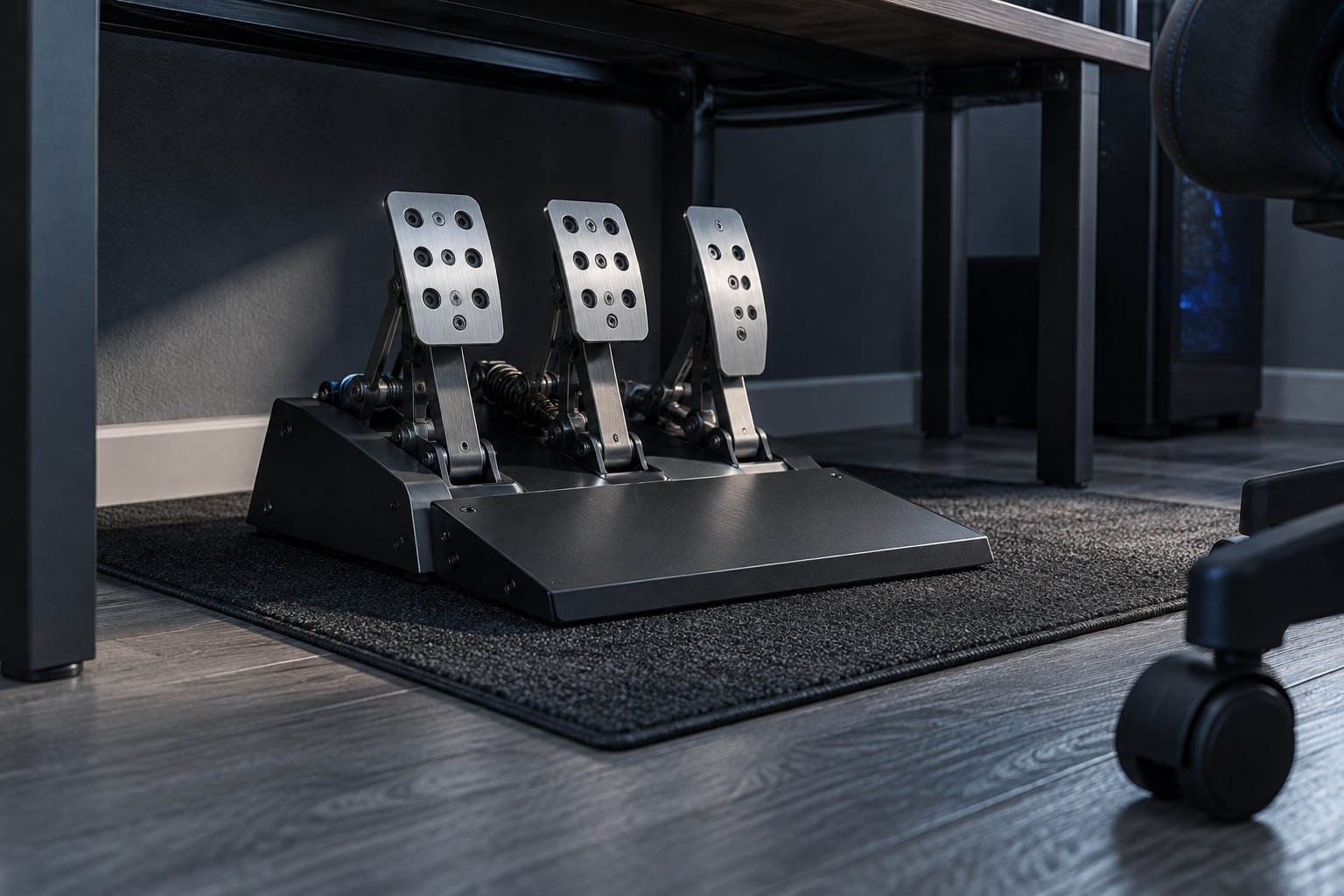
Set the pedals in the intended position and press them gently while seated normally. Notice whether the pedal base slides, the chair rolls backward or both happen. These are different problems. Adding grip under the pedals will not stop a rolling chair, and locking a chair will not secure an unstable pedal base.
Check the pedal maker's instructions for carpet grips, rubber feet or mounting holes. Some features are intended for particular surfaces and should not be used on a finish they can damage. A floor mat should remain flat and stable rather than bunching under the base.
Measure the distance from the seat and the room needed for full pedal travel. You should be able to use the controls without stretching to reach them or having the base pressed against an unsuitable object. Include the cable route so it does not sit under a pedal or catch a chair wheel.
Choose a supported restraint
A compatible pedal stand or cockpit can provide a fixed relationship between the seat and controls, but it adds size and storage requirements. Check the pedal mounting pattern, fastener specification and load limits. Do not drill into a pedal base unless the manufacturer explicitly provides that procedure.
For a temporary desk setup, use accessories designed for the floor and chair arrangement. Avoid relying on a loose household object behind the pedals that can tip or damage a wall. If a restraint works only when pressed at one particular angle, it is not a dependable solution for repeated braking.
After securing the arrangement, test gradually and recheck the position. Stronger pedal resistance can change how much force reaches the stand and seat. Follow the equipment's limits rather than assuming a firmer setting is always more realistic or useful.
Keep the setup easy to reset after storage. Marking the preferred position on a removable mat or recording the stand adjustment can save repeated trial and error. Before each session, check that cables are free, fasteners are secure as instructed and the base has not shifted. Consistent pedal placement helps you learn the control range without compensating for moving equipment.