Match output before capacity
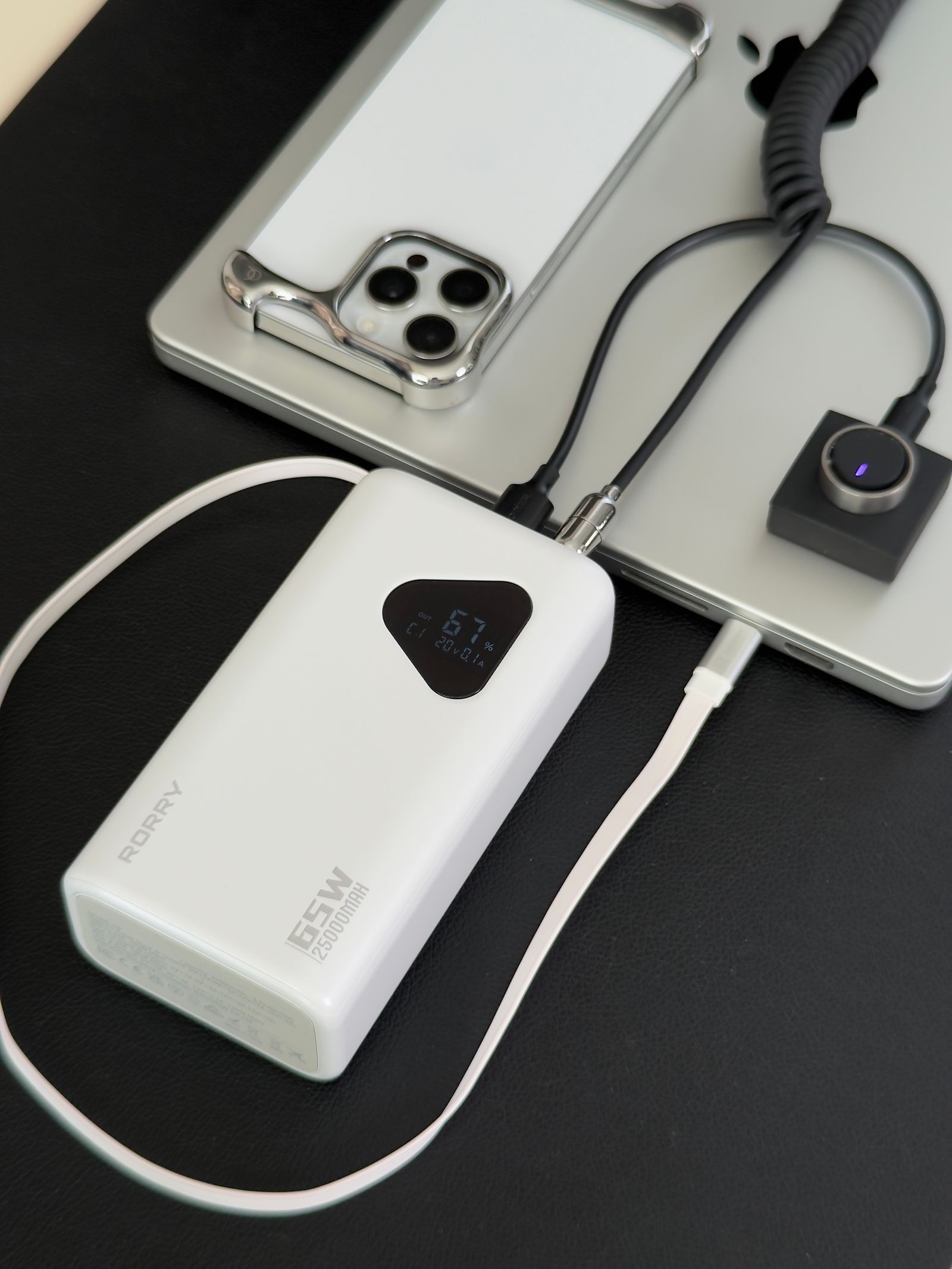
Read the handheld's charging requirements and the bank's output specifications for the port you will use. A large capacity does not guarantee enough output for the intended workload. Check the supported power-delivery profiles and the manufacturer's compatibility guidance rather than relying on a maximum wattage printed without context.
If several ports are used at once, inspect the bank's shared-power table. Connecting a phone can change what remains available to the handheld. A figure advertised for a single port may not apply to a multi-device arrangement, so test the combination you expect to carry.
Interpret capacity realistically
Capacity figures expressed in milliamp-hours can use the bank's internal cell voltage rather than the output voltage delivered to the device. Watt-hours provide another way to compare stored energy, but conversion losses and the handheld's workload still affect the useful result. Avoid promising a fixed number of full charges from a simple ratio of two marketing numbers.
Consider whether the bank is meant to extend a session while playing or recharge between sessions. Those are different patterns. A demanding game can consume power while charging, so the battery indicator's behavior should be assessed in the actual use case.
Include the bank's weight, cable and charging time in the travel plan. A very large unit can be inconvenient if it makes the handheld bag much heavier or cannot be replenished between trips with the charger you carry.
Plan safe placement and transport
Use a cable rated and supported for the required power arrangement. Keep both devices ventilated as instructed and avoid operating them inside a closed padded pouch. Do not let a heavy bank hang from the handheld's charging cable or rest where it can pull the device from a table.
For air travel or other regulated transport, check the carrier's current battery rules and the bank's marked watt-hour rating before departure. Do not assume that a product marketed for travel is accepted under every carrier's conditions. Keep markings readable and follow the required baggage placement.
Test the bank, cable and handheld before relying on them away from home. Confirm the charging mode and any warning messages, then label the suitable cable. A useful power bank is a supported portable power arrangement, not simply the largest capacity that fits the budget.