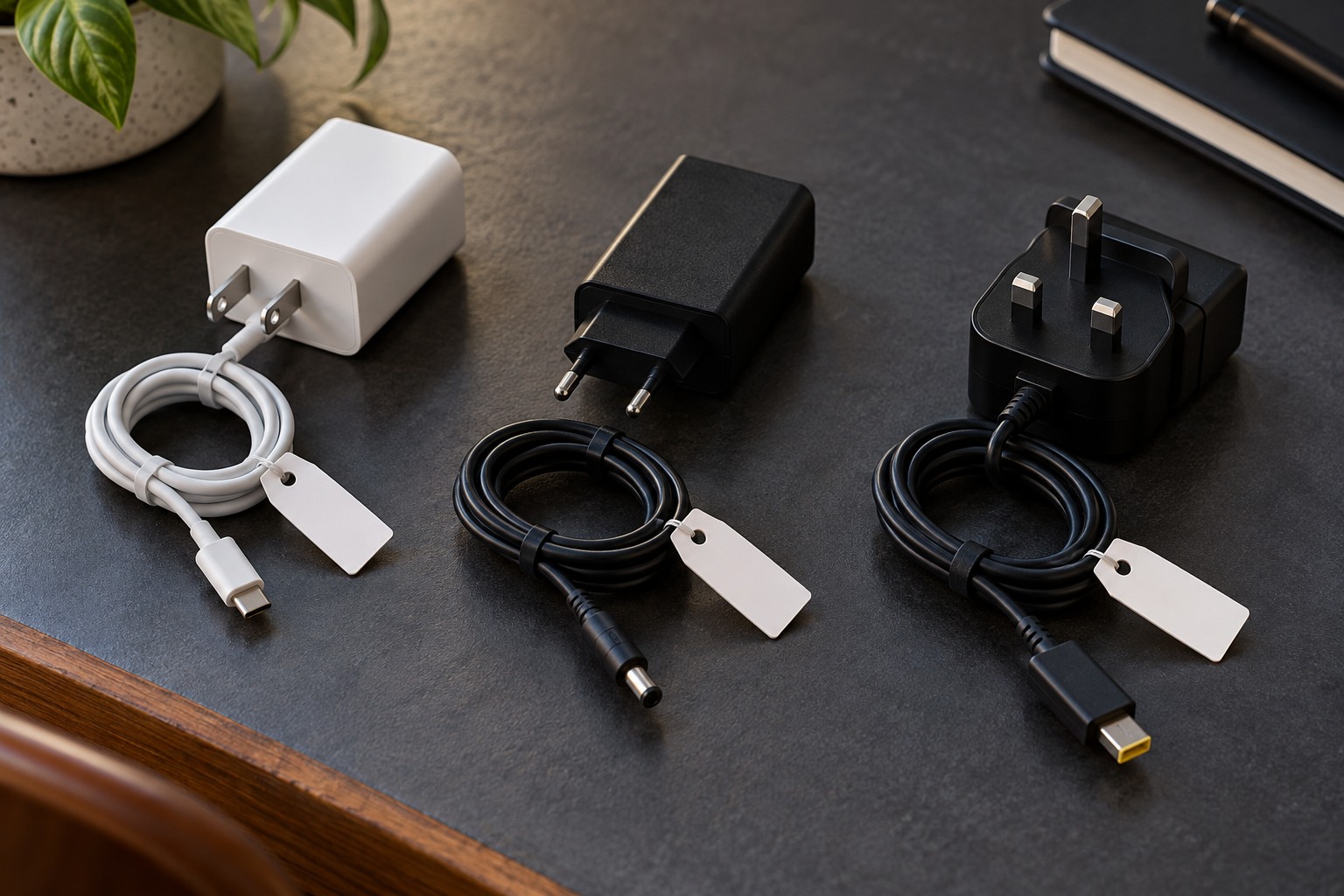
Keep the original specification visible
For a power adapter, identify the exact device it belongs to and retain the manufacturer's voltage, current, polarity and model markings. Your label should add a recognizable device name without covering that information. A plug that fits does not prove electrical compatibility. If the adapter's origin is unknown, investigate it before putting it into a ready-to-use drawer.
For USB leads, label the capability you have established through the product specification or a documented use: charging, data transfer or a supported video connection. Connector shape alone does not establish those capabilities. Avoid a vague label such as fast cable unless you know what rate or function it actually refers to. A model or purchase reference can be useful when the capability is not printed on the cable.
Put the label where it will be read
Use a small tag or wrap near the end that is accessible during setup, leaving the connector and strain relief unobstructed. If both ends disappear behind equipment, label both. On a power brick, choose an area that does not cover vents or safety information. Check that the label material is suitable for the surface and expected warmth.
Write names that another household member can understand. Bedroom monitor supply is clearer than mine, and an exact device model remains useful after a room move. Color coding can supplement the name but should not be the only identifier. A simple text label still works when several cables share a color or the lighting is poor.
Retire uncertainty instead of spreading it
Keep unidentified adapters separate from confirmed equipment until their compatibility is established. Do not relabel an adapter based only on a successful brief power-on test. Check the manufacturer's requirements or replace it with an appropriate supported supply. This is especially important when several older devices have left similar-looking chargers in the same box.
Update labels when a device is sold or a cable is reassigned, and remove obsolete tags. Keep a short inventory only if the number of accessories justifies it. Before travel, match each labeled supply and lead to the actual device list. The purpose is to prevent the moment when a bag contains three similar cables but none of them supports the connection you need.